Reading 4: Required Equipment and Communication Expectations
Your instructor may also require a class-specific uniform or clinical attire for skills labs and ride time. Check the course syllabus for specific dress code requirements.
You do not need a stethoscope until later in the course (blood pressure assessment modules), but purchasing one early is worthwhile if your budget allows. A basic Littmann Lightweight or similar model is sufficient for EMT-level assessment.
Communication Expectations and the Q&A System
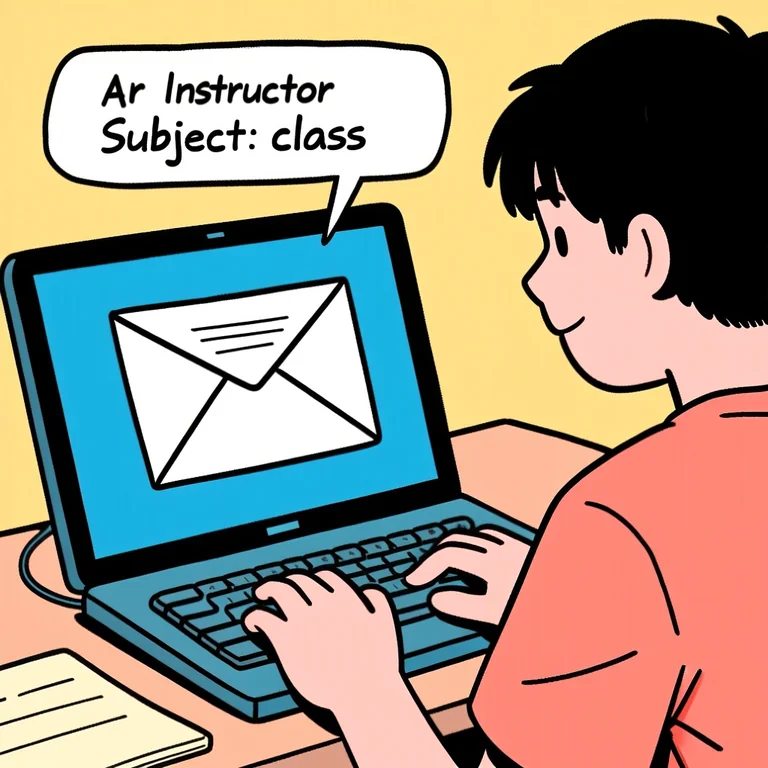
Your instructor is committed to answering your questions promptly. The platform has a built-in Q&A system designed to make getting help as easy as possible. Look for the "Ask a Question" button in the top navigation bar — it is available on every page. When you click it, a window opens where you can type your question and submit it directly to your instructor. The platform automatically tags your question with the module you are currently viewing, so your instructor knows exactly what topic you are asking about.
After your instructor responds, you will see a notification badge appear next to "My Answers" in the navigation bar. Click it to view your instructor's response and mark it as read. Your question history is saved so you can refer back to previous answers at any time.
Your instructor may choose to make certain Q&A exchanges public on the module page. When this happens, the question is posted anonymously — other students will see "A student asked" rather than your name. Public Q&A helps the entire class because many students have the same questions. Check the "Module Q&A" button on each module page to see if other students have already asked about something you are wondering about.
Use the Q&A system for anything related to content, activities, grades, or technical problems. Ask early and ask often — there is no such thing as a bad question in this course.
For urgent matters — illness, emergencies, inability to attend class — contact your instructor by text or phone using the contact information in the syllabus. Do not rely solely on the platform for urgent communication, as your instructor may not be logged in.
Expect a response within 24 business hours for platform messages. Your instructor will not respond to messages sent at 11 PM demanding an immediate grade change. Plan ahead, ask questions early, and communicate proactively when you anticipate a problem.
Professional communication is expected at all times, whether in platform messages, in the classroom, or during clinical rotations. You are a healthcare provider in training. How you communicate reflects your professionalism.
Stop and think
List the required personal equipment for this course and explain why each item is needed for EMS work specifically.
Model Answer: The required equipment includes latex-free nitrile gloves for infection control and protection against bloodborne pathogens, ANSI-rated safety glasses to protect eyes from splatter and debris on scene, a CPR pocket mask for safe delivery of rescue breaths without direct contact, a pen and notepad to document patient information quickly on scene, a watch with seconds display to accurately time pulse and respiratory rates, a penlight for pupil assessment during the neurological exam, and trauma shears to cut through clothing rapidly when assessing an injured patient. Each item serves a specific clinical purpose that students will practice during skills labs and use during ride time.
Stop and think
What is the correct communication channel for each of the following: a question about a quiz answer, concern about missing a class session, a technical glitch on the platform, and an urgent personal emergency on the day of class?
Model Answer: A question about a quiz answer and a technical glitch on the platform should both go through the "Ask Instructor" feature built into the platform, which is the designated channel for course-related and technical questions. A concern about missing a class session can also be sent through the platform, ideally in advance, with documentation of the reason. An urgent personal emergency on the day of class requires direct contact by phone or text using the instructor's contact information from the syllabus, since the instructor may not be logged into the platform and cannot respond quickly enough through it.
Stop and think
Why is professional communication emphasized in an EMT course? How does communication in the classroom connect to communication on an EMS scene?
Model Answer: EMTs communicate constantly on scene — with patients, families, bystanders, dispatchers, hospital staff, and other providers — and the clarity, tone, and professionalism of that communication directly affects patient care and team coordination. Practicing professional communication habits in the classroom and on the platform builds the same habits that will appear on every emergency call. A student who communicates disrespectfully or carelessly in class is showing a pattern that will carry into the field, where the stakes are much higher.
---
Reading complete — grade saved